
Coupe Glass Sizes: Compare Models for Bulk Orders
Eight current Lida cocktail coupes range from 130 to 260 ml in listed capacity (about 4.4–8.8 US fl oz) and 130 to 180 mm in overall height. Capacity alone cannot tell a bar buyer how a drink will look or whether a glass fits a rack or carton. GJB-2 and ZCTGX0022 both list 240 ml, yet GJB-2 is 49 mm taller and its rim is 20 mm wider. Select the model code first, then test a sample with your drink and packing requirements.
The measurements below come from Lida's 2026 machine-made catalogue and named hand-blown size sheets. They are catalogue values for the specific models shown. A listed capacity is the full glass capacity, not a recommended cocktail pour. Lida's Cocktail Glasses collection remains the place to browse the available models and request pricing; this article explains how to use their dimensions in a buying decision.
Eight Lida coupe models by capacity and dimensions
| Model | Production and shape | Listed capacity | Height | Rim diameter | Base diameter |
|---|---|---|---|---|---|
| ZCTGX0016 | Hand-blown, straight-sided | 130 ml | 132 mm | 91 mm | 74 mm |
| ZCTGX0014 | Hand-blown | 140 ml | 164 mm | 102 mm | 74 mm |
| GJ-5513 | Machine-made, small coupe | 150 ml | 160 mm | 90 mm | 65 mm |
| GJ-5506 | Machine-made, shallow coupe | 190 ml | 155 mm | 103 mm | 75 mm |
| GJ-5504 | Machine-made, straight-sided | 210 ml | 130 mm | 90 mm | 70 mm |
| GJB-2 | Machine-made, textured | 240 ml | 180 mm | 110 mm | 70 mm |
| ZCTGX0022 | Hand-blown | 240 ml | 131 mm | 90 mm | 70 mm |
| GJ-5502 | Machine-made | 260 ml | 155 mm | 90 mm | 70 mm |
The table gives a useful first cut, but it leaves out one measurement that matters for fitted packaging: maximum outside bowl width. The widest point may sit below the rim. Ask Lida to check that width on the approved sample before specifying a foam cavity, divider or tight rack compartment. Base diameter matters separately for trays and shelf stability; neither rim nor base diameter substitutes for maximum bowl width.
The smallest two hand-blown examples also show why close capacities do not mean interchangeable shapes. ZCTGX0016 lists 130 ml and is 132 mm tall with a 91 mm rim. ZCTGX0014 lists only 10 ml more but stands 32 mm taller and has an 11 mm wider rim. A retailer replacing one code with the other would need to update product photos and packing approval, even though the capacity number barely changes.
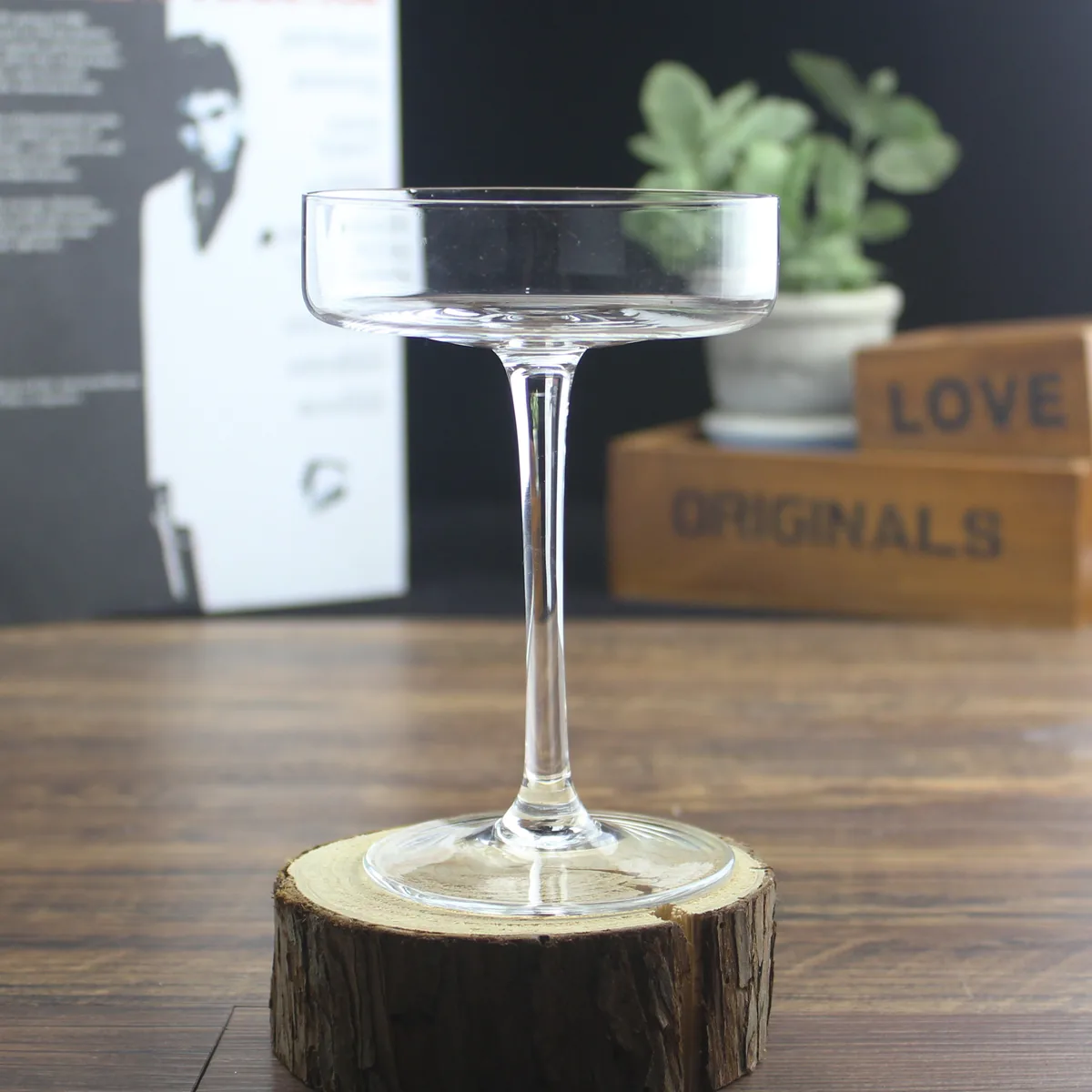
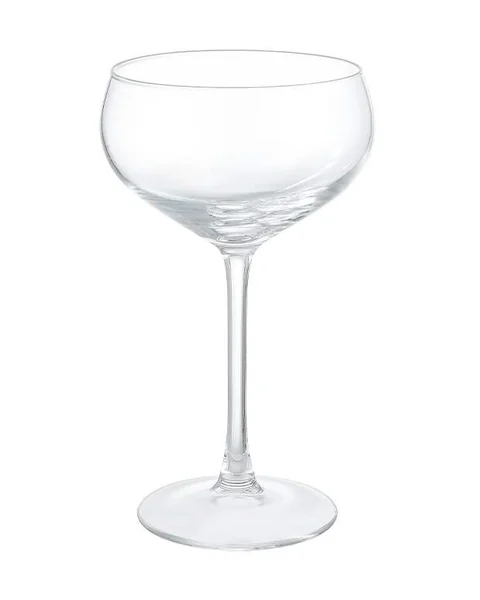
These are separate product photographs, not a scale comparison. Use the dimensions in the table to compare models.
Test the finished drink in shortlisted samples
Start with the drinks your bar or hotel actually serves. Measure one finished recipe after preparation, then pour the same volume into each shortlisted coupe. Compare the liquid level, room for garnish or foam, and the view from a seated guest's position. Photograph the samples from the same angle and distance. This gives the buyer a record of the intended presentation without treating catalogue capacity as a serving-size rule.
The two 240 ml models in the table are useful trial partners because their profiles differ sharply. The wider opening may change how the same measured drink appears, but the table cannot predict usable headroom below the rim. Test the actual finished pour and garnish in both samples before choosing one for a menu.
Have staff carry each filled sample on the tray used in service and lift it by the stem. Check whether the base sits within the tray or coaster and whether the garnish clears nearby glasses. Record the recipe, finished volume, model code and sample photograph together. If a venue serves drinks with materially different finished volumes, trial more than one recipe rather than relying on a single capacity label for the whole menu.
Check rack, shelf and tray fit as separate measurements
An existing glass rack has its own compartment width, depth and usable height. Measure those clearances, then compare them with the approved glass's total height, maximum bowl width and base. Do not claim a rack fit from the rim number alone. A rack can also have dividers or a top frame that narrows the usable space; a physical sample is the final check.
Shelves and trays pose different questions. GJ-5504 and GJB-2 are both machine-made coupes, but their listed heights are 130 and 180 mm respectively. A 50 mm difference may decide which shelf accommodates the glass. On a tray, measure the foot and the clearance around neighbouring glasses. Those checks should be made with the same tray, shelf and storage layout the buyer will use, not a generic barware diagram.
For a distributor selling to multiple venues, record the known limits supplied by each major account. One coupe may be a good match for a particular bar's rack but require a different carton or storage plan for another customer. Keep those fit results by model code so replenishment does not silently substitute a glass of the same nominal capacity but different dimensions.
Specify the retail or shipping pack after choosing the glass
A fitted retail set needs the internal box length, width and height, number of glasses, and protective insert design. An export carton needs its own pieces-per-carton count, outer dimensions and gross weight. A mixed barware carton needs a layout for the other shapes sharing it. These are distinct approvals: a coupe that fits a single-glass insert is not thereby approved for a six-piece box or a mixed shipment.
Ask for maximum outside bowl width on the selected sample and allow for the divider or cushioning in the actual pack. The unprotected glass dimensions in the table are not cavity dimensions. If the intended packaging changes, request the new carton measurements before comparing freight or committing artwork to a fitted box.
Keep the approved packing drawing or physical arrangement with the purchase order. It should show the model code, finish, glass orientation, pieces per inner pack and outer carton, and any retail artwork reference. When the shipment arrives, those details let the receiving team distinguish a packing change from a model change. They also give the buyer a repeatable specification for the next order.
Keep finish and production route tied to the model code
GJB-2 has a separate gold-rim catalogue version, GJB-2JB, with the same listed dimensions. The finish changes the sample and care review even though the table's size row does not change. Approve the appearance, decoration position and applicable care instructions on the exact code. Do not put a general dishwasher or durability claim on retail packaging without evidence for that model and finish.
Lida's machine-made and hand-blown ranges offer different sourcing routes. The production label alone does not establish a defect limit, lead time, minimum quantity or wash performance. Request the current commercial and quality terms for the shortlisted code. If two models will appear in one branded range, compare their actual samples side by side before approving the series.
Send a sample and bulk-order brief
Give Lida the exact model codes, intended drinks or retail format, estimated quantity and destination. Add the rack's clear width, depth and height, the maximum bowl width allowed, and any fitted-box dimensions. State whether the request is for a plain, textured or gold-rim version. “240 ml coupe” alone does not identify the shape or finish to sample.
Ask for samples of the shortlisted codes, then record the approved sample, finish, serving trial and packing arrangement against each purchase line. Request confirmed pieces per carton, outer-carton dimensions, gross weight, current minimum and availability before finalizing the order. The Cocktail Glasses collection shows the wider range; send the selected codes and constraints when you are ready for a model-specific quote.