
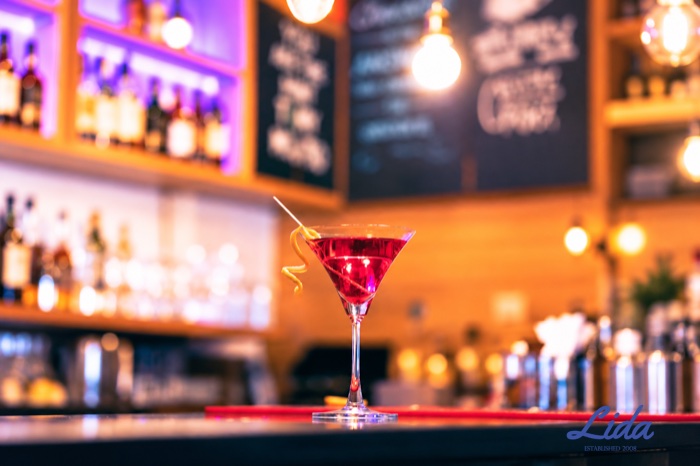
Martini Glass Sizes: Six Models for Bar Buyers
A 130 ml martini glass and a 330 ml one create very different choices for a bar program, even though both have the familiar V-shaped bowl. The larger Lida model also stands 10 mm taller and has a rim 34 mm wider. For a bulk order, compare the listed capacity with the glass's height, rim and base before you request samples or specify a rack and carton.
The six models below come from Lida's 2026 machine-made catalogue and the named hand-blown dimension sheets. Their listed capacities are model specifications, not recommended cocktail pours. Confirm the final dimensions and packing around an approved physical sample for the model you order.
Compare six current Martini glass models
| Model | Production | Listed capacity | Height | Rim diameter | Base diameter |
|---|---|---|---|---|---|
| GJ-5507 | Machine-made | 130 ml | 190 mm | 93 mm | 74 mm |
| GJB-1 | Machine-made, textured | 260 ml | 170 mm | 110 mm | 70 mm |
| GJB-1JB | Machine-made, textured with gold rim | 260 ml | 170 mm | 110 mm | 70 mm |
| ZCTGX0009 | Hand-blown, textured | 270 ml | 170 mm | 118 mm | 77 mm |
| ZCTGX0004 | Hand-blown | 275 ml | 185 mm | 110 mm | 73 mm |
| ZCTGX0007 | Hand-blown | 330 ml | 200 mm | 127 mm | 90 mm |
The smallest listed capacity here is GJ-5507 at 130 ml; ZCTGX0007 is the largest at 330 ml. Their heights differ by just 10 mm, but their rims differ by 34 mm. If the glasses will be stored in a compartmented rack or packed in fitted inserts, measure the available width as well as height. The rim dimension in a catalogue does not tell you the maximum width of every bowl, so send the rack or insert dimensions for a model-specific fit check.
GJB-1 and GJB-1JB share the listed dimensions. The second code denotes the gold-rim appearance shown in the catalogue. Keep those codes separate in your order and sample approval: a finish change matters even when the nominal size does not. Ask for care and decoration information for the exact finish you choose; the shared measurements do not establish identical washing requirements.
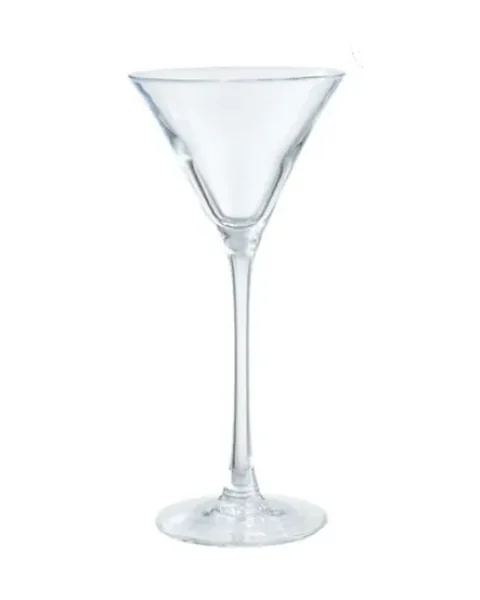
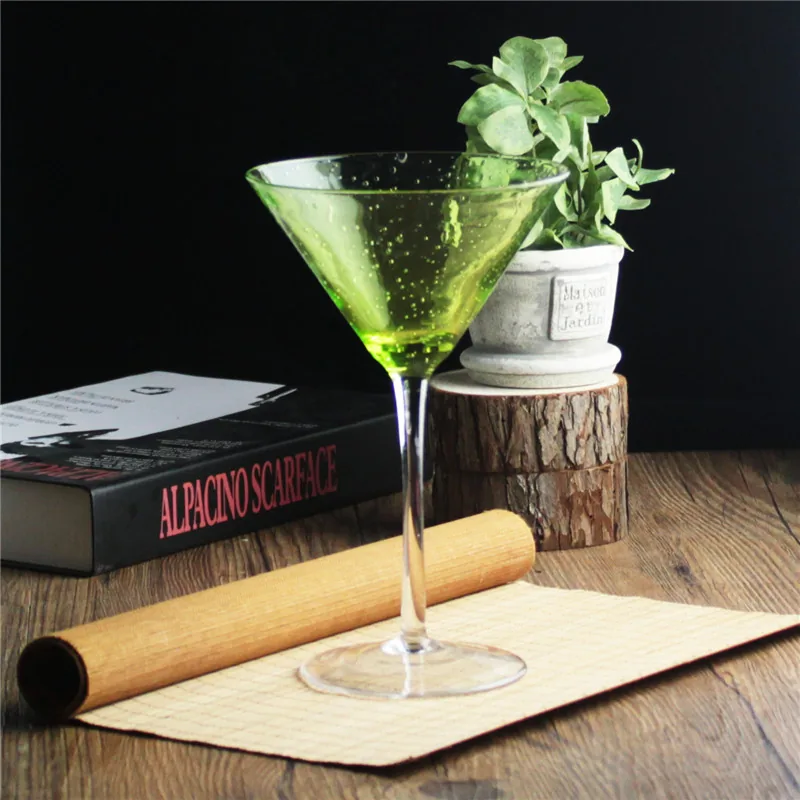
The photographs are not shown at the same scale. Compare the measured dimensions in the table.
Choose a size against the drink and the service setup
Start with the drink your venue intends to serve, including its actual volume after mixing, then test that pour in a sample. A catalogue's 260 ml figure is a listed model capacity, not a target fill line. A very wide opening can change how full a particular pour looks, while a smaller bowl may leave less room for carrying the drink. The answer depends on your own recipe and service method, so a physical pour test is more useful than a universal “standard Martini size.”
Next, check the constraints around the glass. GJ-5507 stands 190 mm high with a 74 mm base; ZCTGX0007 stands 200 mm high with a 90 mm base. A rack, shelf or gift box sized for one should not be assumed to fit the other. Include clearance for handling and any internal packing material when you approve the final arrangement.
For a brand or distributor, decide whether the range needs one Martini size or several. A compact 130 ml shape and a broader 330 ml shape serve different visual and packaging plans. Compare the selected glasses together, rather than using one model's capacity as a specification for the whole collection. Lida's Cocktail Glasses collection lists the available shapes and codes; the machine-made and hand-blown pages explain the two supply routes.
Build a shortlist around the menu, not a nominal size
For a single-drink bar program, shortlist two models around the finished drink rather than requesting all six. A venue that wants a compact presentation could compare GJ-5507 with one 260–275 ml option. A bar that serves a larger, garnish-heavy presentation may want to see ZCTGX0007 beside a narrower alternative. These are sample shortlists, not prescribed recipes: the catalogue does not state usable fill levels for those drinks.
Make the comparison under normal service conditions. Mix the actual recipe, including dilution, and pour it as staff would serve it. Photograph the glass from a guest's seated viewpoint and from above, then note the visible headroom. Check whether a garnish touches the rim, whether the drink is easy to carry on the intended tray, and whether the foot sits securely on the bar's working surface. Repeat the test after the drink reaches its normal service temperature. A dry, empty sample cannot answer every presentation question.
For a distributor building a range, the useful distinction may be the silhouette rather than a small capacity step. GJB-1, GJB-1JB and ZCTGX0009 cluster at 260–270 ml, but their texture, finish, rim and base differ. Photograph the approved samples in one lighting setup and record the code under each image. This avoids selling three distinct items under an ambiguous “medium Martini glass” description.
Check rack, shelf and carton fit separately
The table provides total height, rim diameter and base diameter. It does not give the bowl's widest outside diameter, stem thickness or packed size for every model. Those missing measurements matter in different places. A rack compartment needs enough clearance for the bowl and foot; a shelf needs usable height above the upright glass; a fitted carton needs room for the glass and protective material. Do not use the rim diameter as a substitute for all three checks.
Measure the actual space available and send the internal dimensions with your sample request. If the glass will travel in a divided carton, ask for the proposed insert and carton specification for the selected code. If it will live in a hanging rack, test the approved sample in that rack rather than inferring fit from a catalogue photograph. The 130 ml GJ-5507 and 330 ml ZCTGX0007 differ by 16 mm at the base as well as 34 mm at the rim; even a close total height does not make their storage footprint equivalent.
Finish also affects the approval process. GJB-1JB is identified as a gold-rim version of GJB-1. Approve the exact decorated sample, then confirm the handling and care instructions supplied for that finish. Do not extend instructions for an undecorated model to a decorated one without a supplier check.
Put the right details in the sample request
Send the model codes you want to see, your approximate quantity, destination and the sizes of any rack, shelf or fitted pack. State whether a textured or gold-rim finish is required. If you have a planned drink volume, share it as a service requirement, not as the glass's catalogue capacity.
Ask the team to confirm the approved sample, final dimensions, decoration, care instructions and packing specification for each code before production. Those details identify the item you can reorder later. Browse the full Cocktail collection or send your shortlist for a model-specific quote.
For repeat orders, keep the approved sample reference beside the purchase order and artwork proof. Record the full model code and finish, not just “Martini glass, 260 ml.” If your sales listing uses a market-specific volume unit, check its conversion and keep the original millilitre specification in the supply record. The physical sample and agreed packing specification remain the basis for acceptance when nominal catalogue figures are close.
Martini glass size questions from buyers
Is 260 ml the amount of cocktail to pour? No. It is the listed capacity of GJB-1 and GJB-1JB. Test the finished drink and desired headroom in the exact glass.
Can two Martini glasses with the same capacity share one insert? Not automatically. Compare total height, rim, widest bowl, base and the protective material around each approved sample.
Does a gold rim change the model code? In this range, GJB-1JB identifies the gold-rim version of GJB-1. Keep the finish-specific code in sample, artwork and order records.