
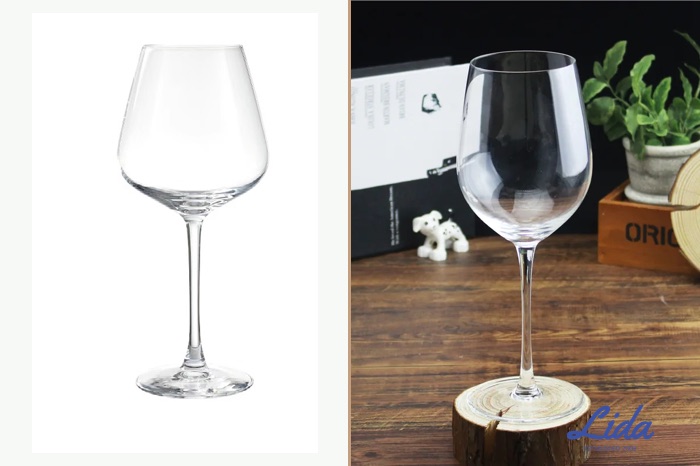
Wine Glass Sizes: Capacity and Dimensions for Bulk Buyers
A listed capacity does not tell you whether a wine glass will fit your retailer’s gift box or your hotel’s glass rack. Lida models GJ-3302 and ZRWG0011 both list 580 ml, but one stands 230 mm high and the other 246 mm. If your order has a fixed shelf, rack or carton size, that difference belongs in the buying decision.
The figures below come from Lida’s current machine-made catalogue and hand-blown model dimension sheets. Use them to narrow your shortlist. We will confirm dimensions against the approved sample and packing specification for the order you place.
Check these wine glass dimensions before requesting samples
| Measurement | Why it matters to your order |
|---|---|
| Model code | Identifies the exact bowl and stem when several glasses have similar capacities. |
| Listed capacity | Helps you compare models; it does not set your serving pour. |
| Total height | Determines whether the glass clears a shelf, display, rack or box. |
| Rim diameter | Describes the opening and helps distinguish bowl shapes. |
| Base diameter | Shows the footprint for a shelf or fitted packing insert. |
| Weight | Helps you compare handling and packing needs by model. |
If you have a fitted carton cavity or display slot, also send its maximum width. Rim diameter is not maximum bowl diameter. We can check the widest part of your shortlisted model when that measurement is needed for the pack or display. Put the units and measurement points on the agreed specification so your purchasing and packing teams use the same figures.
Compare sizes across real Lida models
The table lists six current models. Dimensions are in millimetres; capacities are the listed values in millilitres. Each row describes the named model only.
| Model and use | Production | Capacity | Height | Rim | Base | Weight |
|---|---|---|---|---|---|---|
| GJ-3302 · Red wine | Machine-made | 580 ml | 230 mm | 68 mm | 80 mm | 220 g |
| ZRWG0011 · Red wine | Hand-blown | 580 ml | 246 mm | 72 mm | 85 mm | 200 g |
| GJ-3304 · Red wine | Machine-made | 700 ml | 210 mm | 88 mm | 80 mm | 226 g |
| ZZBG0024 · Red wine | Hand-blown | 900 ml | 244 mm | 92 mm | 86 mm | 280 g |
| GJ-1102 · White wine | Machine-made | 408 ml | 210 mm | 65 mm | 75 mm | 160 g |
| ZRWG0008 · White wine | Hand-blown | 410 ml | 232 mm | 48 mm | 73 mm | 90 g |
If your shelf has 240 mm of clear height, the listed 246 mm ZRWG0011 does not fit, while the 230 mm GJ-3302 remains a candidate. The two white wine models are only 2 ml apart in listed capacity, yet ZRWG0008 is 22 mm taller and has a rim 17 mm narrower than GJ-1102. Those differences affect the appearance of a coordinated range and the space needed around each glass.
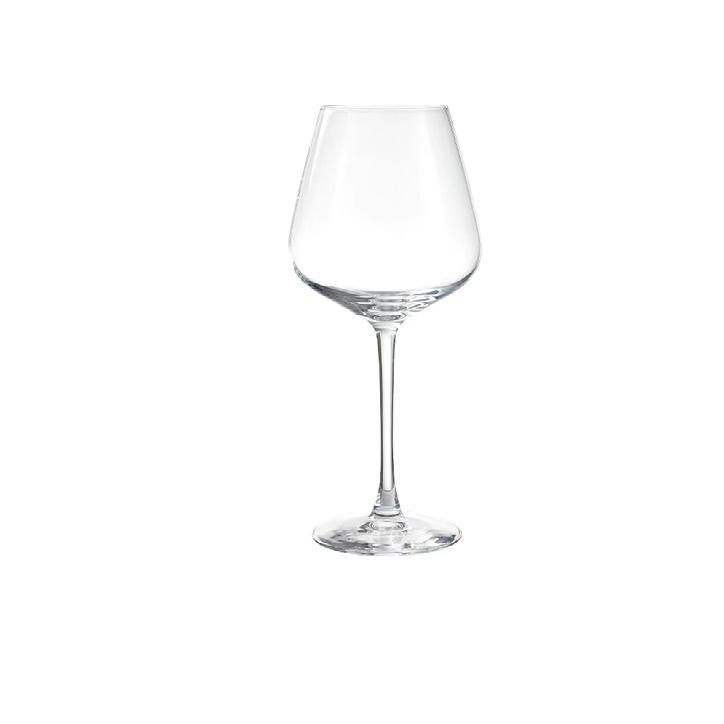
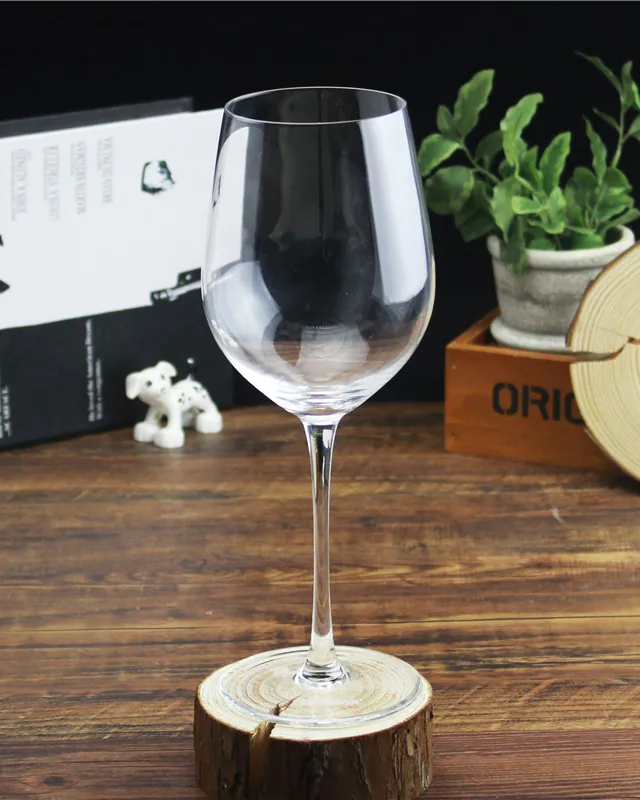
These model photos are not shown at the same scale. Use the dimensions above for a measured comparison.
Browse the current red wine glass models and white wine glass models for more photographs and model codes. When fit is critical, approve the selected glass against a physical sample and the final pack, not the photograph alone.
Listed capacity is not the serving pour
A 580 ml catalogue capacity does not mean you should pour 580 ml of wine. For by-the-glass service, choose the pour your business intends to serve, then check its presentation in a sample of the selected bowl. The same pour will sit differently in a broad 700 ml glass and a narrower 410 ml glass.
For a retail or private-label line, keep the listed glass capacity separate from any suggested serving information on your packaging. Record the model code alongside the agreed product specification so a reorder uses the same glass, not another shape with a similar capacity.
Choose a size range for your sales channel
For hotels and restaurants, start with the red and white wine styles you need to serve, then check total height, base footprint and handling against your storage setup. For retail sets, check the inner pack, gift box and outer carton around the actual glasses. Use physical samples to verify whether the stem and foot clear your insert.
For a distributor’s range, compare several model codes side by side rather than picking one capacity for each category. The Products catalogue groups glasses by use; the machine-made and hand-blown pages explain the two production routes. Ask us to confirm material, care instructions and packing format for each selected model; these can vary within a production route.