Champagne Glass vs Wine Glass: What to Stock for Sparkling Service
A restaurant can serve sparkling wine in a dedicated Champagne flute or tulip, or test a universal wine glass already used for other wines. The buying decision is whether a separate sparkling silhouette earns its own model code, storage space and reorder line. In Lida's range, flute XB-01 stands 250 mm high with a 45 mm rim; universal wine glass GJ-2203 stands 230 mm high with a 62 mm rim. Their listed capacities are 180 and 405 ml. Those numbers identify two different glasses, not the amount a venue should pour.
The four examples below are named Lida models from the Champagne and Universal Wine Glasses collections. Compare the actual shapes and sample pours before deciding whether one code can cover the program or whether sparkling wine needs a dedicated line. This article does not claim that one model produces a better taste or preserves bubbles longer without a test on the selected wine and glass.
Four models from two collections
| Model | Collection and shape | Listed capacity | Height | Rim diameter | Base diameter |
|---|---|---|---|---|---|
| XB-01 | Champagne · classic flute | 180 ml | 250 mm | 45 mm | 70 mm |
| XB-03 | Champagne · tulip flute | 200 ml | 255 mm | 40 mm | 67 mm |
| GJ-2203 | Universal wine glass | 405 ml | 230 mm | 62 mm | 80 mm |
| GJ-2202 | Universal wine glass | 480 ml | 242 mm | 70 mm | 80 mm |
The two Champagne models have taller, narrower listed profiles than the two universal models shown here. Compared with XB-01, GJ-2203 is 20 mm shorter, its rim is 17 mm wider, and its base is 10 mm wider. That difference matters when a buyer has a fixed rack, shelf or carton. The 225 ml gap in catalogue capacity does not tell the buyer where the intended sparkling pour will sit in either bowl.
These four rows are examples, not a complete model list. The Champagne glass sizes guide covers more dimensions within the dedicated category. Keep product browsing and price requests on the two collection pages; use this comparison to decide which type of glass belongs in the service plan.
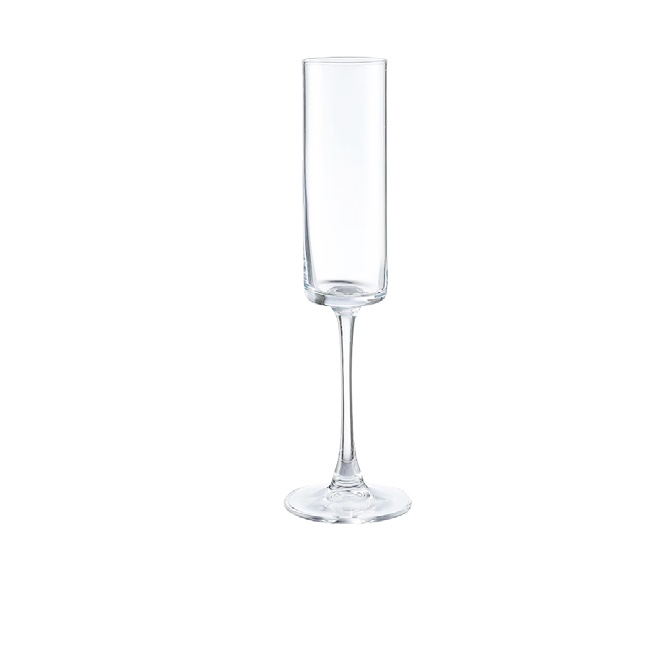
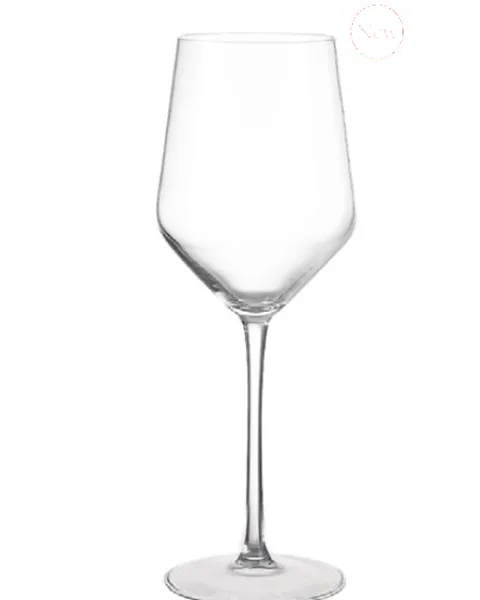
Separate product photographs are not to scale. Use the listed dimensions and approved samples for a measured comparison.
Decide whether sparkling wine needs its own code
A one-code program may suit a venue that wants to use the same universal glass for red, white and sparkling wines. It reduces the number of glass models to store and reorder, but the glass must work for each intended drink and table presentation. Test the actual red, white and sparkling pours in the selected sample. A universal label does not prove that one shape is right for every menu.
A separate Champagne line gives sparkling service a distinct, narrower silhouette. That can matter for a reception, hotel breakfast, event package or retail collection where the buyer wants the product to look different from the still-wine glasses. It also creates another item to count, wash, store and replace. The decision should be made against the venue's expected sparkling volume and the space available for a separate set.
A distributor can carry both categories for different customers. Keep the two product records distinct: a universal wine glass should not be relabelled as a flute, and a flute should not silently replace the universal code on a repeat order. Record which accounts want a dedicated sparkling presentation and which prefer one adaptable model. That demand split determines the purchase quantities more reliably than the style names alone.
Test the same planned pour in both samples
Use the sparkling wine and serving volume the venue plans to offer. Pour that measured volume into each shortlisted sample and compare the visible fill level, handling and table presentation. If service includes a garnish or a sparkling cocktail, test that exact presentation too. Catalogue capacity is a full-glass specification, so it should not be used as a fill line or a fixed serving recommendation.
Repeat the trial in the actual operating sequence. Place clean glasses in the intended rack, carry the filled samples on the planned tray, and note the time from pouring to the guest. Photograph each model at the same scale and from the guest's viewpoint. These observations tell the buyer whether the glass suits the service. They are not a controlled test of taste, aroma or carbonation.
If the venue is considering one universal code for several wines, test the other planned drinks in that same sample as well. Compare its appearance with the existing red and white assortment, not just with the flute. Keep the model code, photograph and intended drinks with the approval record so a future purchase does not substitute a different bowl of similar capacity.
Check racks, trays and packaging before comparing costs
The fixed dimensions point to different clearance risks. XB-01 needs 250 mm of height and has a 70 mm base; GJ-2203 is 230 mm high with an 80 mm base. A low shelf may constrain the flute, while a tray or fitted insert may be affected by the universal glass's wider foot. Measure the rack's clear height, width and depth and test the chosen physical sample. Neither rim diameter in the table gives the maximum outside bowl width.
For a retail set or export carton, request the selected model's inner pack, protective insert, pieces per carton, outer dimensions and gross weight. A box approved for XB-01 cannot be reused for GJ-2203 merely because both are stemware. If a logo or surface finish is planned, approve the decorated sample and obtain care instructions for that exact version; the plain-glass dimensions do not establish washing or durability performance after decoration.
Lida's supplied Egg Pack rows make the shipment difference concrete. The G-suffix versions use the same base glass designs, but XB-01G is listed at 48 pieces and 0.070 m³ per outer carton, while GJ-2203G is listed at 48 pieces and 0.086 m³. At the same 2,016-piece quantity, each line needs 42 cartons: 2.940 m³ for XB-01G and 3.612 m³ for GJ-2203G on the rounded carton-CBM figures. This compares two specified packs at the same piece count; it does not settle the total cost of a one-code versus two-code service program. If either packaging version changes, recalculate with the final packing sheet. Our bulk-order planning guide shows a separate mixed-container example.
Price two actual purchase lists rather than comparing capacities: one with the universal model covering the planned wines, and one with separate universal and sparkling lines. Ask Lida to confirm the minimum, availability, unit price and packing for each code. Compare the resulting cartons, storage positions, replenishment timing and delivered costs. The option with fewer model codes is not automatically the cheaper order.
Send a model-specific buying brief
Shortlist one or two Champagne models and one or two universal models, then state the drinks, measured serving volumes, approximate quantities and destination. Add rack and box limits, any logo requirement, and whether the program aims to use one glass code or keep a dedicated sparkling line. Request samples and model-specific packing specifications before fixing the order.
The Champagne and Universal Wine Glasses collections show the available range. Send Lida the selected codes and constraints so the quote and sample review address the same service plan. Keep each approved sample, finish and packing version with its purchase line for later replenishment.