
Wine Glass Packaging for Bulk Orders: What Buyers Need to Specify
Before ordering wine glasses in bulk, fix the model code, packing version and approved packed sample. Lida's supplied packing rows show two branded six-piece inner-box configurations and three unbranded Egg Pack configurations. These are real options for named models, not one packaging standard for every wine glass. The buyer's sales channel and receiving process determine which details matter most.
A six-piece box may be part of a retail assortment, while a distributor supplying venues may receive and allocate master cartons. Both still need protection and an outer pack approved for the actual glass. Neither the words “branded box” nor “Egg Pack” prove a lower breakage rate or freight cost. Use the final pack and carton sheet to compare quotations.
Read the exact packing line, not only the glass code
The five rows below come from Lida packing information supplied for a wholesale order. GJ-1102 and GJ-3302 have a branded six-piece inner box, barcode and label in these configurations. GJ-2203G, GJ-3304G and XB-01G are listed as Egg Pack with no brand. In these three codes, the G suffix identifies the packing version of the same base glass style; keep it on the quote and packing list.
| Packing line | Inner-pack description | Pieces per outer carton | Outer carton L × W × H | Listed CBM per carton |
|---|---|---|---|---|
| GJ-1102 | Six-piece branded box | 48 | 53.8 × 36.6 × 45 cm | 0.089 m³ |
| GJ-3302 | Six-piece branded box | 48 | 64.4 × 43.8 × 48.4 cm | 0.137 m³ |
| GJ-2203G | Unbranded Egg Pack | 48 | 51.7 × 34.7 × 47.7 cm | 0.086 m³ |
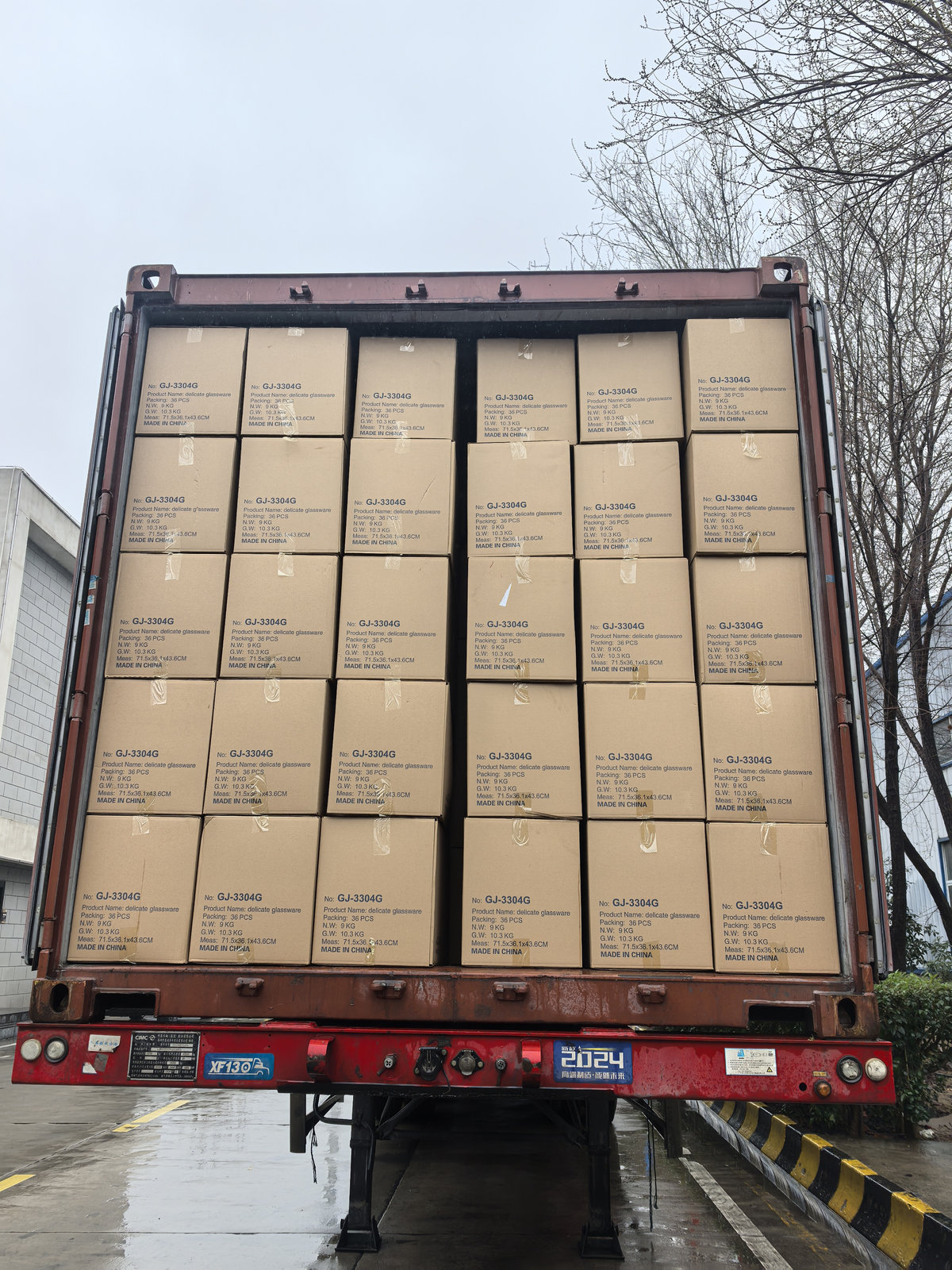
| GJ-3304G | Unbranded Egg Pack | 36 | 71.5 × 36.1 × 43.6 cm | 0.113 m³ |
| XB-01G | Unbranded Egg Pack | 48 | 45.1 × 30.3 × 51 cm | 0.070 m³ |
The listed CBM values are rounded carton figures. The 0.137 m³ carton for GJ-3302 and the 0.086 m³ carton for GJ-2203G contain different glasses and different packs; their volume difference cannot be attributed to the inner packaging alone. The table also does not establish an acceptable damage rate, stack height or gross carton weight. Each of those needs its own order-specific information.
For the two branded-box rows, 48 glasses per outer carton means eight six-piece inner boxes. Count and label the inner boxes as the units the buyer will actually distribute, while retaining 48 pieces as the master-carton quantity on the shipping list. The Egg Pack rows give outer-carton quantities but do not state a six-piece retail-box count.
Choose the inner pack for the way the buyer sells or uses the glass
For a retail six-piece set, the inner box is part of the product customers receive. Check the approved artwork, barcode, label language, number of pieces, glass orientation and whether the actual glass sits correctly in its insert. A current packing row with a branded box shows that configuration for GJ-1102 or GJ-3302; it does not approve the buyer's new logo, a different set size or another model's box.
For a hospitality distributor, the receiving unit may be the outer carton. The team needs to identify the model, pack version and quantity without opening every carton. An unbranded Egg Pack can be quoted for the named G-suffix lines when that format fits the buyer's distribution plan, but the order still needs agreed carton marks, protection and a receiving list. Do not assume the same piece count or dimensions apply when a retail box replaces the Egg Pack.
A buyer may mix branded and unbranded lines in one purchase. Keep each packing version as a separate quotation and purchase-order line. This prevents a 48-piece carton from being treated as interchangeable with another 48-piece carton and keeps the retail boxes allocated to the accounts that actually need them. If a customer requests a special barcode, language or shipping mark, record it against the relevant line before the artwork and pack are approved.
Approve the complete packed sample
The bare glass's height and rim diameter do not define a protective cavity. A stemmed bowl may be widest below the rim, and the stem and foot also need clearance. Put the approved glass into the proposed inner pack and outer carton, then check the divider or insert, any surface contact and the way the pack closes. A logo or decorated rim may change what needs protection. If a retailer has its own vendor packing manual, use that document for the specific order rather than assuming a generic carton arrangement will pass its requirements.
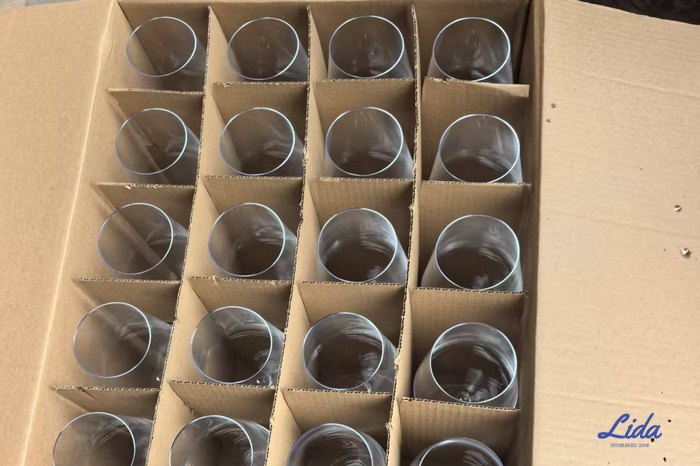
The photograph below shows a GJ-2201 bulk-carton example with corrugated partitions. It illustrates the kind of physical layout a buyer can inspect. The buyer should approve a packed sample or drawing for the selected model and format, including any inner box and protective materials.
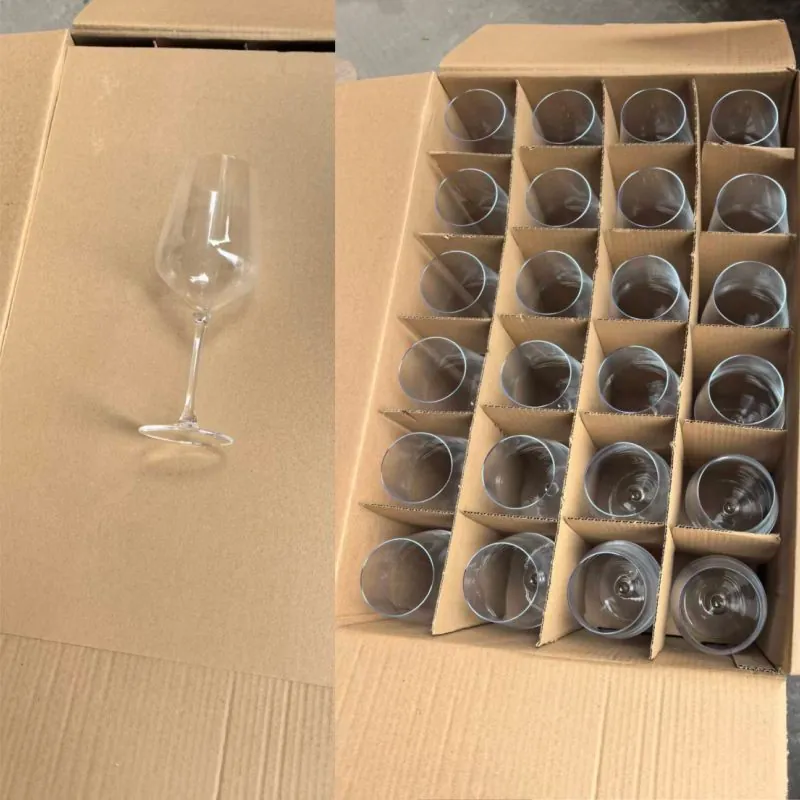
Do not infer a tested transit result from a photograph. If the buyer's channel requires a packed-carton test, inspection method or acceptance criterion, agree on the method and evidence before making a performance claim. Save the approved sample, packing drawing and artwork version with the order so a replacement or repeat run uses the same specification.
Use outer-carton data for quantity and freight planning
Factory quantities should be converted to complete outer cartons before a buyer compares shipping options. In the supplied GJ-3304G Egg Pack line, each carton holds 36 glasses and is listed at 0.113 m³. A request for at least 2,000 glasses rounds to 56 cartons, 2,016 glasses and 6.328 m³ on the listed-CBM basis. The extra 16 glasses and carton count belong on the quotation and purchase order; a rounded piece target alone is not a packing list.
Carton volume is only one part of the shipment. A forwarder also needs the final carton gross weight, exact outer dimensions, pallet choice if any, and total carton count. The supplied packing rows support the quantities and rounded CBM shown here, but the final gross weights must come from the approved packing list. A change to a branded inner box, divider, outer carton or pallet arrangement can change the load plan even when the glass code stays the same.
For a mixed order, calculate cartons and listed CBM line by line using the format that will actually ship. The bulk-order planning article gives a separate five-style 20GP candidate and the limits of that paper calculation. This packaging guide deals with approving the pack that supplies those numbers. A lower carton CBM or a more compact-looking photograph does not by itself prove a lower delivered cost or a safe physical fit.
Make the mixed shipment easy to receive and reorder
The branded-box rows explicitly mention barcode and label, while the three Egg Pack rows are marked unbranded. Decide which identifiers the receiving warehouse needs on the inner pack and outer carton: model code, pack version, pieces per carton, finish, customer allocation and destination marks where applicable. Keep the approved wording and artwork with the purchase record. A carton marked only “wine glasses” is hard to allocate when several shapes share a shipment.
At dispatch, reconcile the carton marks with the final packing list. At receipt, check the number of cartons and their codes before dividing stock among venues or resale customers. If a supplier changes an inner pack or carton, issue a revised specification rather than silently using the old barcode or reorder code. This matters when the glass body is unchanged but its G-suffix packing version or retail presentation differs.
Send a quote-ready packaging brief
Name the glass model, chosen packing version, planned pieces per model, destination and sales channel. State whether customers will receive a branded six-piece set, warehouse cartons or another approved format. Add barcode and label requirements, logo artwork, retail-box dimensions and any applicable retailer packing manual. The buyer and Lida can then review one packed sample and one line-by-line carton sheet before finalizing price or freight.
The quote should return the actual inner and outer pack counts, final carton dimensions and CBM, gross weight, marks and any packing changes for decoration. Send Lida the model list and packaging requirements so the sample, purchase order and shipping documents describe the same glasses and cartons.