7 Checks Before Choosing a Wine Glass Wholesale Supplier
Quick answer: before you choose a wine glass wholesale supplier, confirm seven things in writing for the exact model you plan to buy: how it is made, its specifications, the MOQ, a sample, customization terms, export packing, and lead time with available documents. A supplier who answers these clearly is usually easier to work with than one who only sends a low price.
Wine glasses are cheap per piece but bought in thousands. A small mismatch in capacity, finish or packing repeats across the whole order, and it is expensive to fix once the glass has been made and shipped. The checks below cover the points that most often decide whether a bulk stemware order goes smoothly. Use them to compare any supplier, including us.
The seven checks at a glance
| # | Check | Ask the supplier | Warning sign |
|---|---|---|---|
| 1 | Production method | Is this model machine-made or hand-blown? | Cannot say how a model is made |
| 2 | Specifications | Model code, capacity, height, rim diameter? | Only photos and “similar to” |
| 3 | MOQ | Per model or per order? Does decoration change it? | MOQ changes after the quote |
| 4 | Sample | Availability, cost, timing, approval reference? | No sample before bulk production |
| 5 | Customization | Shape, logo method, print area, packing? | “Anything is possible” with no details |
| 6 | Export packing | How are glasses separated in the carton? | “Standard packing” with no description |
| 7 | Lead time and documents | When does the clock start? What can you supply? | Vague dates or promises |
1. Production method: machine-made or hand-blown
Ask whether the model is machine-made or hand-blown, because this sets repeatability, price level and design freedom.
- Machine-made stemware suits repeatable styles with defined specifications. It works for hotels, restaurant groups and distributors who reorder the same glass.
- Hand-blown stemware gives more freedom for distinctive shapes and custom collections, with a different minimum order and price level.
At Lida, selected stocked machine-made models have a guide MOQ from 2,000 pieces, and handmade models from 3,000 pieces. For detail on each route, see our pages on machine-made stemware and hand-blown stemware.
2. Specifications: a model code, not a photo
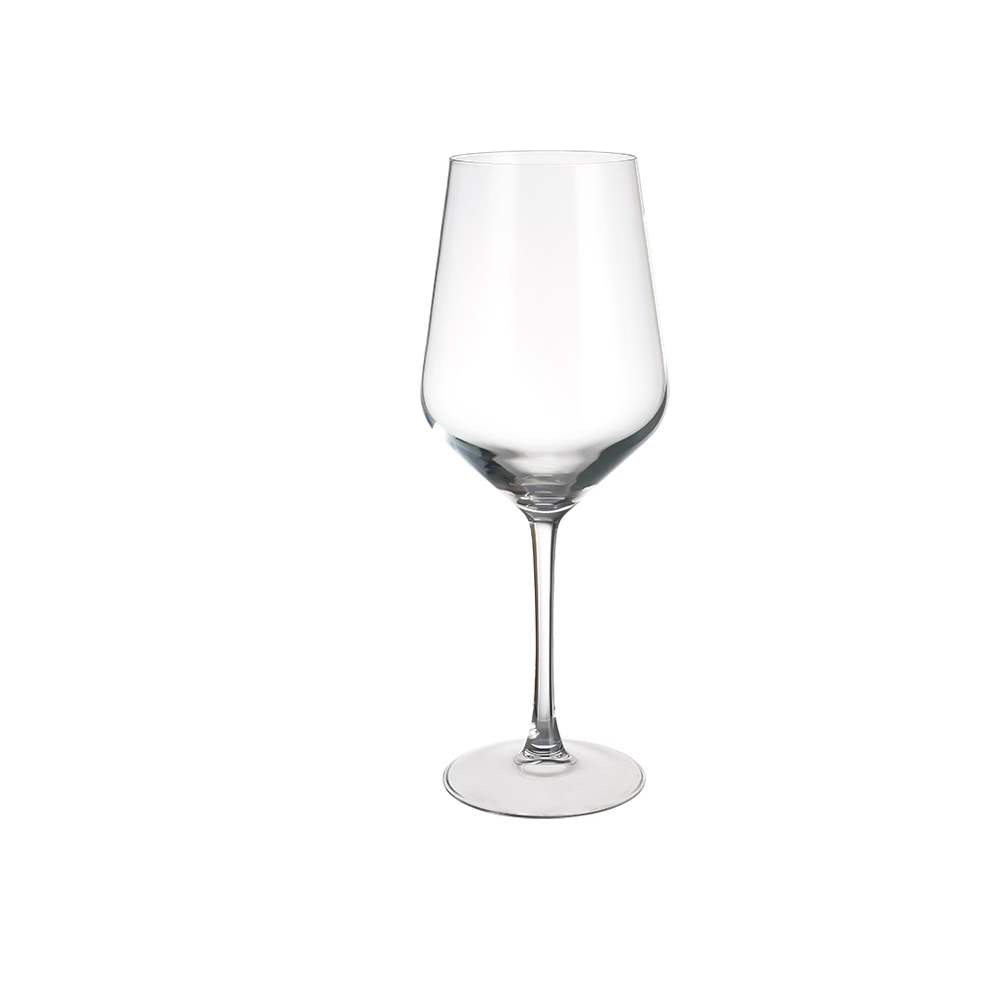
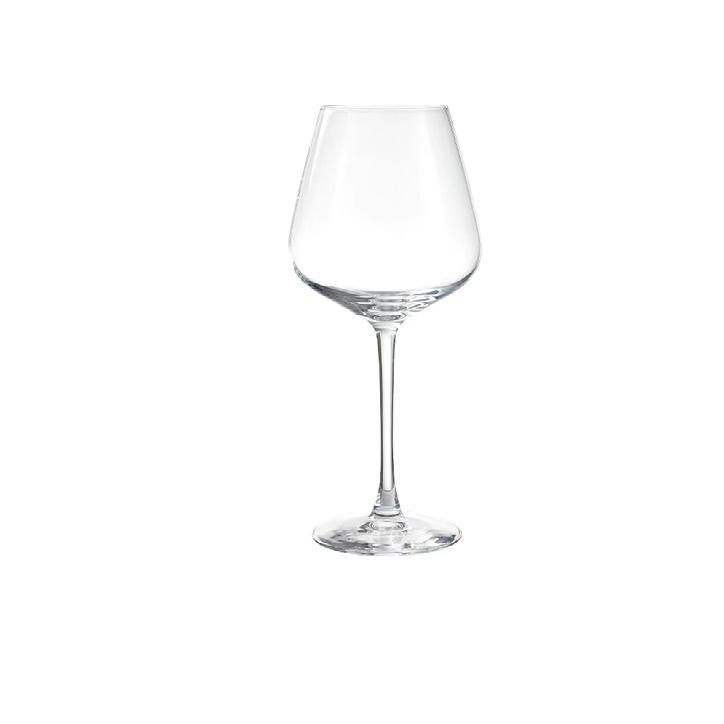
A usable specification names the model code, production method, capacity and key dimensions. “Red wine glass” alone says very little. In our catalogue, GJ-3302 is a machine-made Bordeaux red wine glass of 580 ml, while ZZBG0024 is a hand-blown Burgundy red wine glass of 900 ml. Both are red wine glasses, but they serve very different programs.
Ask for these four figures before you compare prices:
- Capacity in ml
- Overall height
- Bowl diameter
- Rim diameter
For a reference on how sizes differ by style, read our guide to wine glass sizes for bulk buyers and the red vs white wine glass model comparison.
3. MOQ: what it covers
MOQ is rarely a single number. It can depend on the model, production method, decoration and packaging, so ask exactly what it covers.
- Is the MOQ per model or per order?
- Does it change with logo decoration or custom packing?
- Is it different for stocked models and custom shapes?
Our MOQ figures are guides. The final MOQ is confirmed against the model, decoration and packing you choose. Whatever supplier you use, get the MOQ confirmed in writing for your exact model.
4. Samples: approve before bulk
Approve a sample before bulk production, because photos cannot show weight, clarity, rim finish or balance in the hand. If the order includes a logo, check a decorated sample too.
- Is a sample available for this model, and at what cost and timing?
- What will be the approval reference for production?
For our projects, sample availability, cost and timing are confirmed per model and requirement before you approve production. Agree the approved sample as the reference for the order, so any later difference has a clear standard.
5. Customization: confirm feasibility before the quote
Customization terms should be confirmed before pricing, not after. Three areas matter:
- Glass shape: compare existing bowls and capacities, or send a drawing or reference for feasibility review. Ask whether tooling is needed.
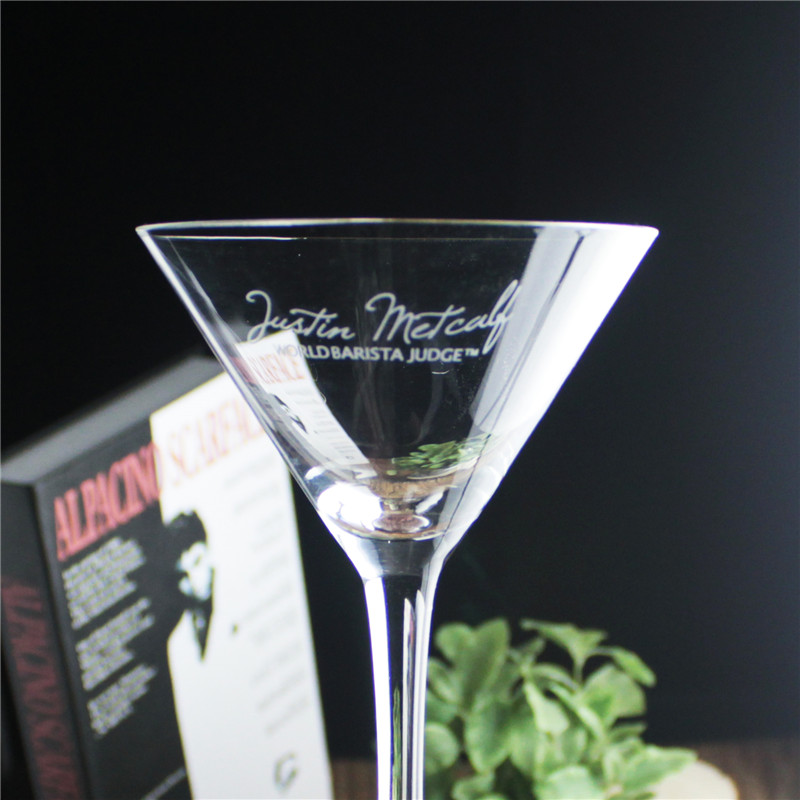
- Logo decoration: send your artwork and placement. The supplier should confirm the method and print area for that specific glass.
- Packaging: bulk cartons or retail boxes, with protective inserts where needed.
6. Export packing: where breakage starts
Ask how the glasses are packed, model by model, because packing protects the order on a long journey. Useful questions:
- How are stems and bowls separated inside the carton?
- Are partitions or inserts used?
- Does the carton suit your pallet or container plan?
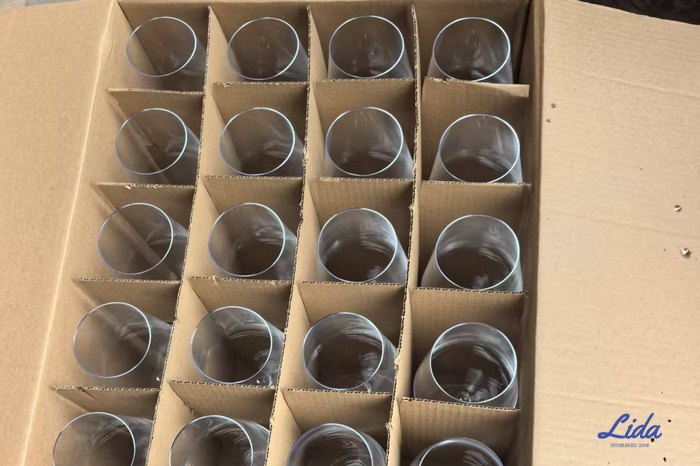
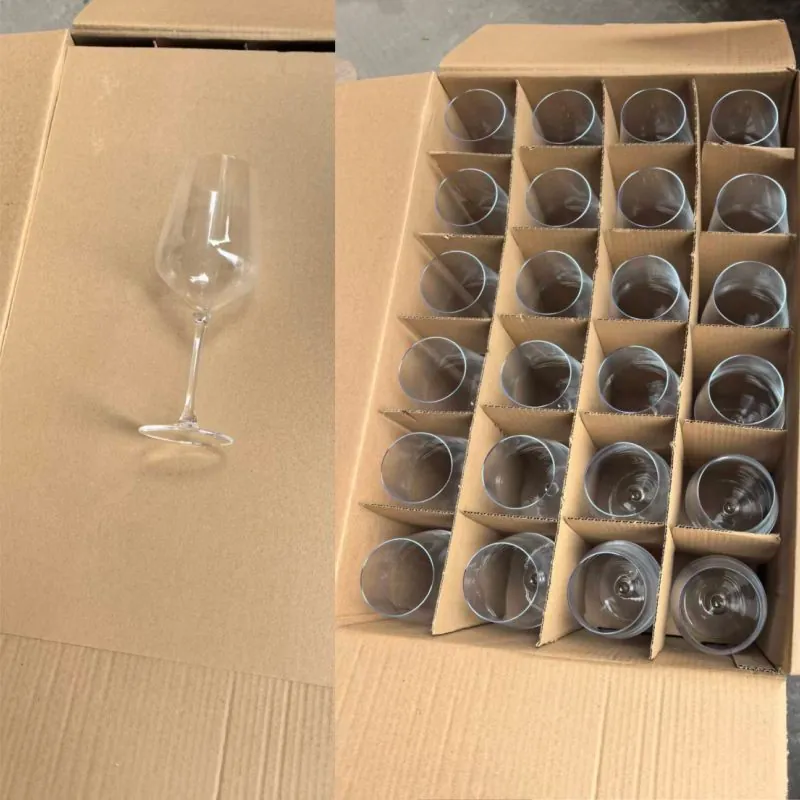
For example, we show a partitioned bulk carton for our GJ-2201 wine glass. Final packing is agreed for each order. For more, read our guide to wine glass packaging for bulk orders and our article on planning a bulk wine glass order for restaurant groups.
7. Lead time and documents
Ask when the production clock starts, and which documents the supplier can actually provide.
- Lead time: typical production for our orders is around 30 days after the order and sample are approved. The exact schedule depends on the model, customization and production slot. Shipping transit time is additional.
- Documents: ask which factory, inspection, packing or test documents can be supplied for your selected model and target market, and confirm what is available before you rely on it.
A supplier who tells you plainly what they can and cannot provide is easier to trust than one who promises everything.
Questions to copy into your supplier email
- What is the model code, and is it machine-made or hand-blown?
- What are the capacity, overall height, bowl diameter and rim diameter?
- What is the MOQ for this model, with and without logo and custom packing?
- Can you send a sample, and at what cost and timing?
- Which logo method and print area are available for this glass?
- How are the glasses separated and packed in the carton?
- What is the production time after order and sample approval, and is transit separate?
- Which factory, inspection, packing or test documents can you provide for my market?
How a Lida order works
- Send a clear brief: a model or reference, quantity and destination.
- Confirm feasibility and quote: agree specifications, MOQ, packing and price.
- Approve the sample: agree the sample and inspection criteria.
- Produce against the brief: produce, inspect and prepare the approved order for shipment.
You can browse the full wine glass range to choose models before you contact us.
FAQ
What is the minimum order quantity for wholesale wine glasses?
It depends on the model, production method, decoration and packaging. As a guide, selected stocked machine-made models start from 2,000 pieces and handmade models from 3,000 pieces. Confirm the MOQ for your exact model.
Should I always ask for a sample first?
Yes. A sample is the most reliable way to check weight, clarity, rim finish and decoration before you approve bulk production.
How long does production usually take?
Typical production is around 30 days after order and sample approval. Exact timing depends on the model, customization and production slot, and shipping time is additional.
What should I include in a quote request?
Send a model code or reference, the quantity, any logo or decoration, packing needs, destination and target date. The more specific the brief, the faster the supplier can confirm models and quotation details.
Ready to compare options?
Send us a model number or describe the glass you need, along with quantity, decoration, packing, destination and target date. We will review the options and reply with the next steps.